
Building on a Saudi Real Estate Legacy: A Conversation with Khalid Bin Seaidan Khalid bin Abdullah bin Saidan

Saudi Arabia’s real estate sector is evolving rapidly, bringing new expectations, technologies and opportunities to an industry that has long played an important role in the Kingdom’s economic development.
The scale of this transformation can be seen across the housing and property markets. Saudi Arabia’s Housing Program reported that homeownership among Saudi families reached 63.74% in 2023, as the Kingdom works towards its target of 70% by 2030.
At the same time, different segments of the property market are moving in different directions. According to Saudi Arabia’s General Authority for Statistics (GASTAT), the Kingdom’s Real Estate Price Index declined by 1.6% year-on-year in the first quarter of 2026, with residential prices falling by 3.6%, while commercial property prices increased by 3.4%.
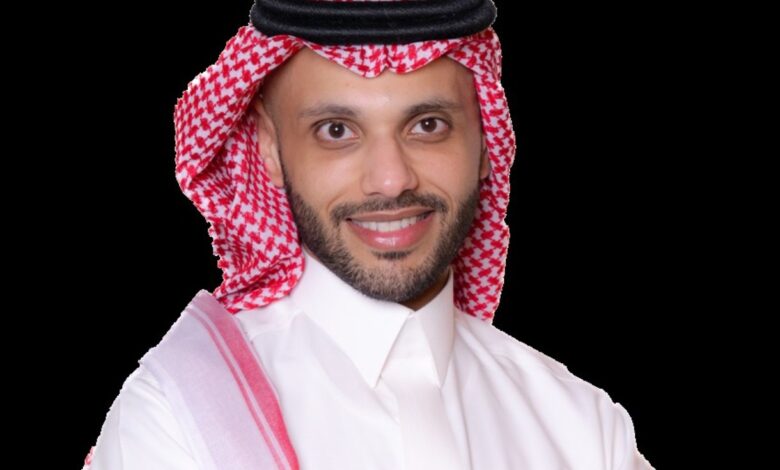
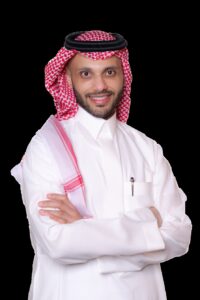
For Khalid Bin Seaidan, Executive Director of Bin Saedan Real Estate Services, that transformation is also personal. He represents a new generation of a family with decades of experience in Saudi real estate. With an academic background spanning civil engineering and international business management, Khalid brings a combination of technical and commercial experience to his role in the Saudi real estate sector.
In this conversation, he reflects on that legacy, the changing Saudi property market, evolving customer expectations and the opportunities ahead.
The Family Legacy
Q: You come from a family with a long history in Saudi real estate. How has that shaped the way you approach the business today?
Khalid: Growing up around real estate gave me an understanding very early on that this business is ultimately built on trust, knowledge and long-term relationships. There is a great deal to learn from the generations that came before us, particularly their understanding of the market and their ability to build relationships that lasted for decades.
At the same time, carrying a family name comes with responsibility. For me, the objective is not simply to preserve what previous generations built. It is to build on that foundation and make sure we continue to evolve with the market.
Q: Your father was part of that real estate journey. What did you learn from his generation?
Khalid: Their generation understood the value of reputation. Real estate was very relationship-driven, and your word and reputation were fundamental to doing business.
Those values remain just as important today, even though the way we operate has changed considerably. We now have technology, data, stronger governance structures and increasingly specialised real estate services. I believe the opportunity for our generation is to combine those modern tools with the principles that helped the previous generation build successful businesses.
A More Sophisticated Market
Q: What has changed most dramatically in Saudi real estate during your own career?
Khalid: The sophistication of the market. Real estate today is much broader than buying land, developing it and selling property. We are seeing increasingly specialised businesses across brokerage, property and facility management, investment, valuation and other professional services.
The customer has evolved as well. Buyers and investors have access to far more information, which means they ask better questions and expect greater transparency and professionalism. That is positive for the entire industry because it encourages companies to continually raise their standards.
The market is also becoming more segmented. GASTAT’s first-quarter 2026 data, for example, showed residential property prices declining by 3.6% year-on-year while commercial property prices increased by 3.4%. This illustrates why companies need to understand the differences between asset classes rather than treating the Saudi market as one uniform category.
Q: Saudi Arabia has set ambitious housing objectives. How do you view the progress being made in the residential market?
Khalid: The progress in homeownership has been significant. Saudi Arabia has already made considerable progress from where the market stood less than a decade ago, and the longer-term ambition of reaching 70% homeownership by 2030 means the sector still has an important role to play in expanding access to suitable housing. The Housing Program reported a homeownership rate of 63.74% in 2023, which subsequently increased to 65.4% in 2024.
For companies operating in the sector, the focus should not simply be on delivering more units. It should also be on providing the right products for different customer segments, supporting affordability and quality, and ensuring that customers receive professional guidance throughout the ownership journey.
Leadership and Customer Expectations
Q: You studied civil engineering before completing a master’s degree in international business management. How does that influence the way you lead a real estate business?
Khalid: Civil engineering taught me to look at projects from a technical and analytical perspective—to understand how the different elements of a project fit together and how decisions affect cost, quality and delivery.
Later, studying international business management and project management gave me a broader commercial and organisational perspective. In real estate, you need both. A project has to make technical sense, but ultimately it also has to make business sense.
Q: How do you think the expectations of Saudi homebuyers and property investors are changing?
Khalid: People increasingly look beyond the property itself. Location remains important, of course, but buyers are also thinking about accessibility, services, community, quality and the overall experience of living in or owning that property.
Investors are also becoming more sophisticated in the way they evaluate opportunities. They want to understand rental potential, operating costs, demand, liquidity, regulatory conditions and the long-term prospects of an asset.
For developers and real estate service companies, that means understanding the customer much more deeply and thinking about the long-term value of an asset rather than focusing only on the initial transaction.
The Role of Real Estate Services
Q: What are your priorities as Executive Director of Bin Saedan Real Estate Services?
Khalid: One of my priorities is ensuring that we continue to evolve alongside the Saudi real estate market rather than simply relying on the experience and reputation built over previous decades.
Real estate services are becoming increasingly specialised, particularly across brokerage, property management, facility management and auctions. We want to continue strengthening our capabilities in these areas while improving efficiency, developing our people and using technology where it genuinely adds value.
The growth of official digital infrastructure is also changing how market information is accessed. The Real Estate General Authority’s Real Estate Indicators Platform now provides periodically updated information on sales and rental activity across the Kingdom, supporting greater transparency and more data-driven decision-making.
For me, growth should not simply mean becoming bigger. It should mean becoming better at what we do and creating greater value for our clients and partners.
Continuing the Legacy
Q: Finally, what would you like your own contribution to the Bin Saedan family’s real estate legacy to be?
Khalid: Every generation inherits something from the one before it, but I believe it also has a responsibility to leave something behind for the next.
I would like my contribution to be about building on our family’s experience while helping prepare the business for the future through stronger professional practices, specialised services, good governance and a willingness to keep evolving.
A legacy should not only be about how long a family has been in business. What matters is whether each generation continues to create value and leaves the business stronger for the generation that follows.
